
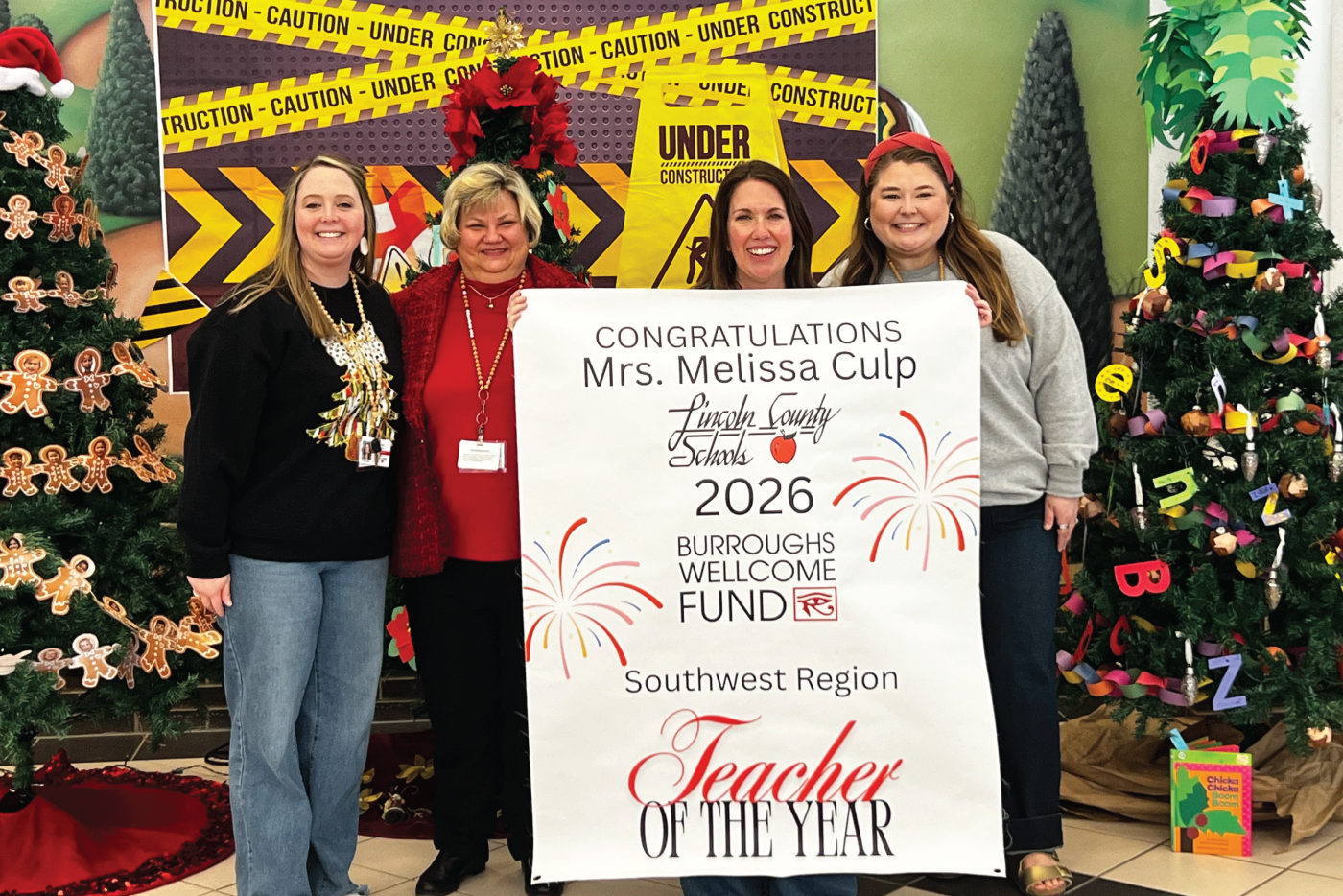
One might assume that with nearly a quarter century of experience under her belt, Melissa Hollar Culp has teaching down to a science – but the way she sees it, every day is a new opportunity to innovate.
Culp intentionally integrates technology into her lessons so that students can learn to think critically, communicate and collaborate using tech, not in spite of it.
She actively studies artificial intelligence, seeking out workshops and resources to deepen her understanding. She is also researching the use of podcasting as an educational tool.
“Consistently, I find that students are frustrated because they don't feel heard or valued for what they have to say,” Culp said. “I want them to know that technology can extend their voice, not replace it.”
Based on research and her own expertise, Culp implemented an innovative teaching method called “playlists.” In addition to traditional instruction, she carves out time for students to work independently or in groups on a sequence of activities.
This allows her to work with smaller groups of students or one-on-one to provide individualized support. It also prevents the whole class from getting behind if one student is stuck and gives more advanced students the freedom to challenge themselves.
The idea for playlists came about as Culp noticed a shift in the way students learn and their social-emotional needs.
“I've observed over the last few years that students now need more authentic opportunities to interact with their peers,” she said. “These opportunities are situations where students learn to communicate effectively with others and engage in productive struggle. Students also practice how to be independent and use resources to solve problems on their own.”
Noticing that an increasing number of students have experienced trauma, Culp worked with her school’s guidance department to learn about trauma-informed teaching. She used what she learned not only in her own classroom, but when planning schoolwide initiatives like the annual vocabulary study.
Principal Shanti Clancy wrote in a letter of recommendation for Culp’s Teacher of the Year application that her professional commitment is matched only by her devotion to her students.
“It's rare to find an educator who excels equally in instruction, leadership, mentorship and policy engagement,” Clancy said. “Melissa does this every day, with professionalism and boundless energy. She strengthens our school culture, advances literacy equity and shapes educational systems.”
This year, Culp and past Teachers of the Year from Lincoln County created a local Teacher Leadership Council to uplift teacher voice on policy decisions that affect them. As part of the initiative, they created a Google Form where educators can share, with varying levels of anonymity, their questions and concerns.
Dr. Aaron Allen, superintendent of Lincoln County Schools, said Culp plays a vital role in shaping policy and programs.
"She stays informed on key legislation and initiatives and is not afraid to speak out on behalf of educators. Her voice is thoughtful, informed and courageous – rooted in what's best for students and those who serve them,” Allen said in a letter of recommendation. “She represents not only her own classroom, but teachers across the district and state with clarity and integrity.”