
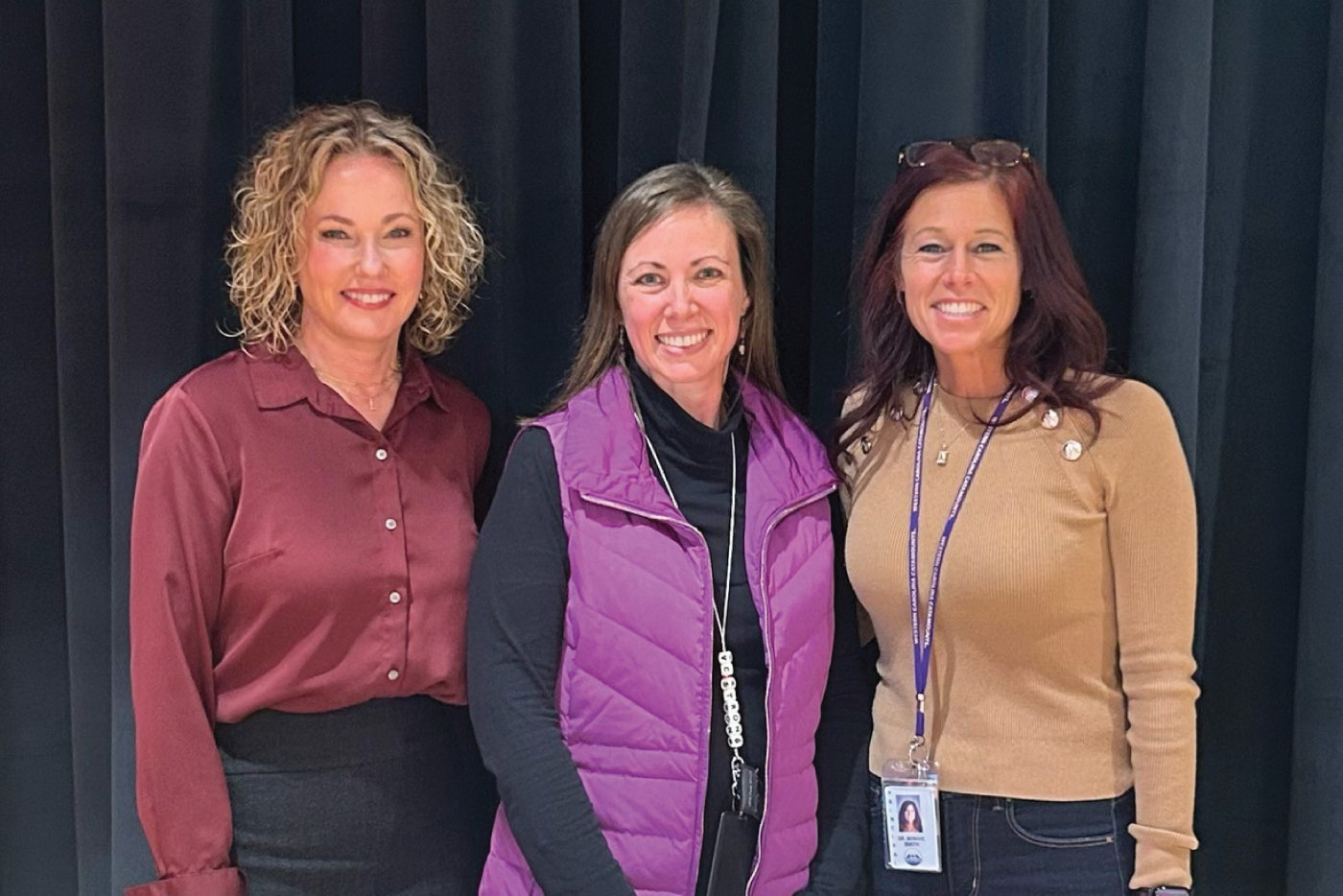
When Hurricane Helene devastated Watauga County in September 2024, it would have been understandable if school was the last thing on Gina Holste’s mind.
Instead, she sprang into action for her students and colleagues, using her flexibility as a reading specialist and two decades of expertise in education to take the lead in supporting others – working to rebuild the school schedule, redesigning bus routes and serving grab-and-go breakfasts to students.
With her classroom destroyed, she worked with students in hallways, on the front porch of school buildings, in corners of shared offices and on picnic blankets outside. She helped create an afterschool program, Learning Lodge, for grades 2-4 to mitigate the effects of lost instructional time.
In a letter of recommendation for Holste’s Teacher of the Year application, Valle Crucis School Principal Dr. Bonnie Smith said Holste demonstrated extraordinary strength and determination.
"Despite losing everything in her teaching space, she immediately reached out to families to ensure every student felt supported and connected,” Smith said. “She taught in multiple temporary spaces, sometimes with little more than her resourcefulness and creativity, yet instruction never stopped. Her ability to remain intentional, personal and student-centered in such circumstances is a testament to her character and commitment.”
Holste’s contributions in the aftermath of Hurricane Helene are an extension of her teaching philosophy – that the art of teaching is about two things: the mission and the people.
In her literacy work with students, she follows the structure prescribed by the science of reading, but also incorporates other brain science and spends a lot of time getting to know her students so she can serve their specific needs.
“I intentionally design my classroom environment to be warm, inviting and have a variety of instructional approaches. We use activities that help their brain remember the content we are learning during our lessons,” Holste said. “For example, we practice high frequency words that they are trying to learn to read and spell by using tactile writing. I give choices about whether they want to write on chalkboards or use a piece of screen under paper to make ‘bumpy' writing. When possible, I offer flexible seating or the option to stand if needed. Engagement is crucial to my philosophy of teaching. Students need to feel emotionally ready to receive and learn new information.”
The mental and physical health of her students is a priority for Holste, who says anxiety, depression and addiction to digital devices among students is a growing and serious problem. She has invested hours into professional development activities to better understand why it’s happening and what can be done to combat it.
“These trainings, books and the community forums have helped me understand the experiences that students are encountering at home and the emotional distress they may be experiencing while at school,” she said. “It helped me learn to regulate my own emotions before responding to students' behaviors, the importance of and how to implement rituals in my classroom that help students feel safe and loved and phrases and language that can be used to de-escalate situations so that students can feel grounded and self-regulate their emotions.”
Holste uses this knowledge in her work as a member of her school’s Individual Problem Solving Team (IPST) and the Data Team facilitator for grades K-4.
Dr. Leslie Alexander, superintendent of Watauga County Schools, said that in addition to her thoughtful approach to working with children, Holste is a “pillar of support” for colleagues.
“She collaborates seamlessly with classroom teachers by providing resources, strategies and encouragement that strengthen instruction for all students,” Alexander wrote in a letter of recommendation. “Her willingness to share expertise, mentor colleagues and step in wherever needed reflects her generous spirit and her commitment to the success of the entire school community.”