
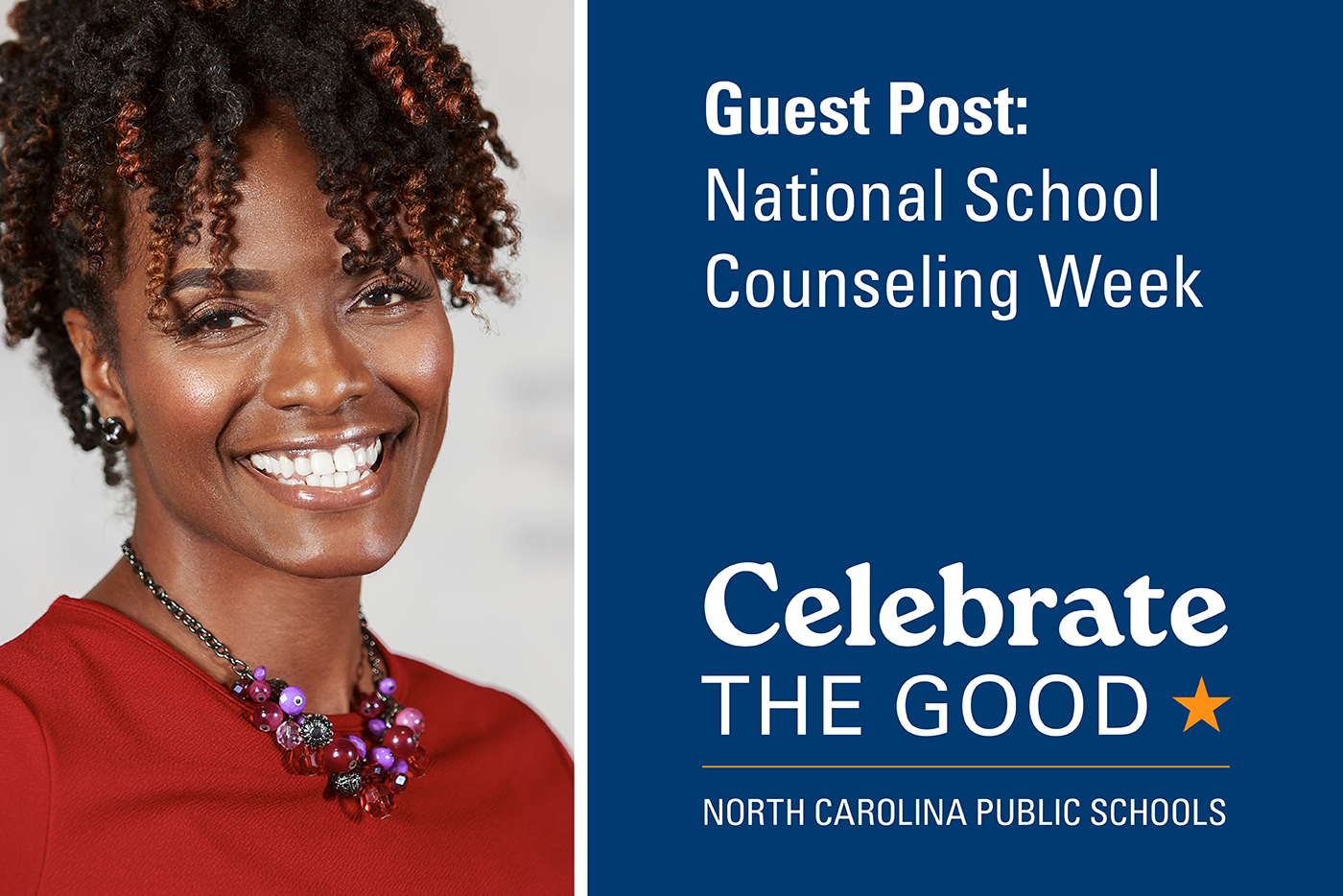
Feb. 2-6 is National School Counseling Week. This post was written by Tuere Dunton-Forbes, a seasoned school counseling professional with two decades of experience in Charlotte-Mecklenburg Schools (CMS). She currently serves as one of the district’s three School Counseling Program Managers, championing middle school wellness, interdisciplinary collaboration and staff well-being. As a member of the School Health Advisory Council, Dunton-Forbes brings strategic insight and heartfelt advocacy to initiatives that support the whole child — and the whole educator.
Strong student support begins with creating intentional spaces for school counselors, social workers, psychologists and mental health professionals. This isn’t a luxury — it’s essential. When structured student service teams, inclusive of an administrator, consistently meet to discuss achievement, social-emotional and career development programming, schools deliver comprehensive plans that boost student success.
Why It Matters
When these teams collaborate, students benefit from proactive, data-driven support across academic, emotional and behavioral domains. It means early intervention — not just crisis response — and wraparound care that sees the whole child, not just test scores.
- School counselors help students apply academic strategies, manage emotions, build interpersonal skills and plan for life after graduation — whether college, career or military service.
- Social workers reduce barriers through assessment, dropout prevention, McKinney-Vento services and crisis intervention.
- Psychologists bring a mental health lens to learning, supporting social-emotional, behavioral and academic development.
These roles are not interchangeable. They are complementary. And when they operate with fidelity, schools become ecosystems of care.
The Time Tug-of-War
Despite evidence supporting interdisciplinary programming, student services professionals often find themselves competing for time with the very curriculum they’re meant to support. Reactive work replaces proactive planning. Achievement metrics take precedence over attendance, emotional well-being and postsecondary readiness. These supports are not optional — they are foundational. When grades overshadow mental health and stability, the mark gets missed, and we fail to educate the whole child.
Mental Health is a Staff Issue, Too
The mental health needs of our students are growing — and so is the strain on the adults who serve them. The domino effect is real: when students are in crisis, staff members are too. Yet many well-being practices for educators remain surface-level, limited to insurance plans or digital wellness platforms.
We need leaders — from the statehouse to the schoolhouse — who consistently model workplace well-being:
- Healthy boundaries and manageable workloads
- Protected planning time and psychological safety
- Staffing schools with the right ratios: one counselor per 250 students nationally; NC legislation suggests 1:300, plus allotments for social workers, psychologists and mental health counselors based on actual need
As State Superintendent Maurice “Mo” Green recently stated, “It means revering all staff.” It also means funding employee well-being — not just talking about it. When staff are well, students are better served. And when wellness becomes a norm, not a novelty, we all win.
CMS offers a strong example through community partnerships:
- School-Based Virtual Care at 115 schools, allowing students and staff to meet with a medical provider during school hours
- Behavioral Health Teletherapy at 32 schools for student mental wellness
- Mobile and On-Site Care Options for staff, removing barriers by meeting people where they are
These innovations make care accessible and timely — a model worth scaling statewide.
Living the Whole Child Framework
North Carolina’s Healthy Schools team promotes the Whole Child, Whole School, Whole Community (WSCC) framework — a model that connects health and academic achievement through evidence-based practices. It’s a powerful vision. But vision without implementation is just a poster on the wall.
To truly educate the whole child, we must create space for all 10 components of the WSCC framework to live in our schools. That means removing barriers to access, filling vacancies with qualified professionals and ensuring counselors aren’t pulled to monitor duty posts or substitute teach when they should be counseling students. It’s not just about letting teachers teach — it’s about letting every professional do the work they were trained to do. That’s how we build schools where every child — and every adult — can thrive.
A Culture of Well-Being, Not Just a Committee
As one of three School Counseling Managers for CMS’ Student Wellness and Academic Support Department, I also serve on our School Health Advisory Council’s Employee Wellness and Physical Environment Subcommittee. I’m proud of the work our team and district are doing to make wellness a guiding principle, not an afterthought. Our committee leads have described my role as one that brings innovation, compassion and strategic insight to every conversation. I’m honored by that. But real change requires more than the voices represented on our committee. It requires all of us — educators, families, policymakers and community partners — working together to build a culture where balance, health and success are interconnected values.
Let’s Reimagine Together
Public schools are not broken. They are brimming with evidence of great outcomes and possibility. However, as expectations increase, it becomes even more important to ensure that student service staff are supported with adequate resources and realistic demands that allow them to focus on the vital roles they play in impacting students.
Let’s consider these questions:
- What would it look like if every educator felt deeply appreciated — not just during their appointed Appreciation Week, but every day?
- How might our schools change if well-being was treated as a core curriculum?
- What role can each of us play in creating cultures of care?
These aren’t rhetorical. They’re invitations. Let’s continue to celebrate the good, while reimagining what’s possible — together.